
Micro Summary: Cloud based phone systems replace traditional phone lines with internet enabled communication platform that give complete mobility, flexibility and lower operating costs. By simply understanding how do cloud based phone systems work, every business can identify how features like call routing, auto-attendant, cloud PBX phone system, mobile apps improve customer experience and internal workflows. For modernize communication, cloud phone systems deliver clearer calls, fewer missed opportunities and easy scalability, that too an affordable hardware or complex setups.
Key Insights:
Go through the key takeaways before you move to read the complete blog. Things you should keep in mind:
- Cloud based phone systems use the internet instead of copper lines, giving businesses more flexibility and advanced features.
- Understanding how do cloud based phone systems work helps companies see the benefits of cloud PBX, VoIP technology and multi-device calling.
- Cloud systems support remote teams by enabling mobile, desktop and VoIP handset access from any location.
- Features such as auto attendant, call queues, voicemail to email and analytics improve customer handling and reduce operational inefficiencies.
- Cloud based business phone system solutions scale quickly, cut costs and eliminate the need for physical hardware.
- TECHOM Systems delivers a tailored cloud phone system built for Australian businesses needing reliable business communication solutions.
Business now relies on clear reliable and flexible communication. It doesn’t matter if you run a small business, manage a mobile team or operate across several locations, communications always impact everything from customer service to daily operations. This is the reason why cloud phone systems are replacing traditional landlines all over Australia. Here, in this blog, you will get to know how do cloud based phone systems work and why they are becoming the preferred choice for businesses. Also, you will get to know how communication infrastructure can help you deliver faster responses, reduce costs and improve customer experience by upgrading to cloud phone system.
What Are Cloud Based Phone Systems?
Before knowing how do cloud phone systems work, knowing what is cloud based phone systems is important. Cloud based phone systems, also known as hosted PBX systems or cloud phone system allow different businesses to make and receive calls with the use of internet instead of traditional copper phone lines. The cloud handles call routing, voicemail storage, audio processing, call recording and all other features. This means that your business does not need any physical phone servers PBX boxes or complicated installation.
Everything runs through secure cloud servers which gives your business communication more scalability, flexibility and affordable foundation. With a cloud-based business phone system, you can take calls from mobiles, laptops or VoIP handsets while using the official business number.
How Do Cloud Based Phone Systems Work?
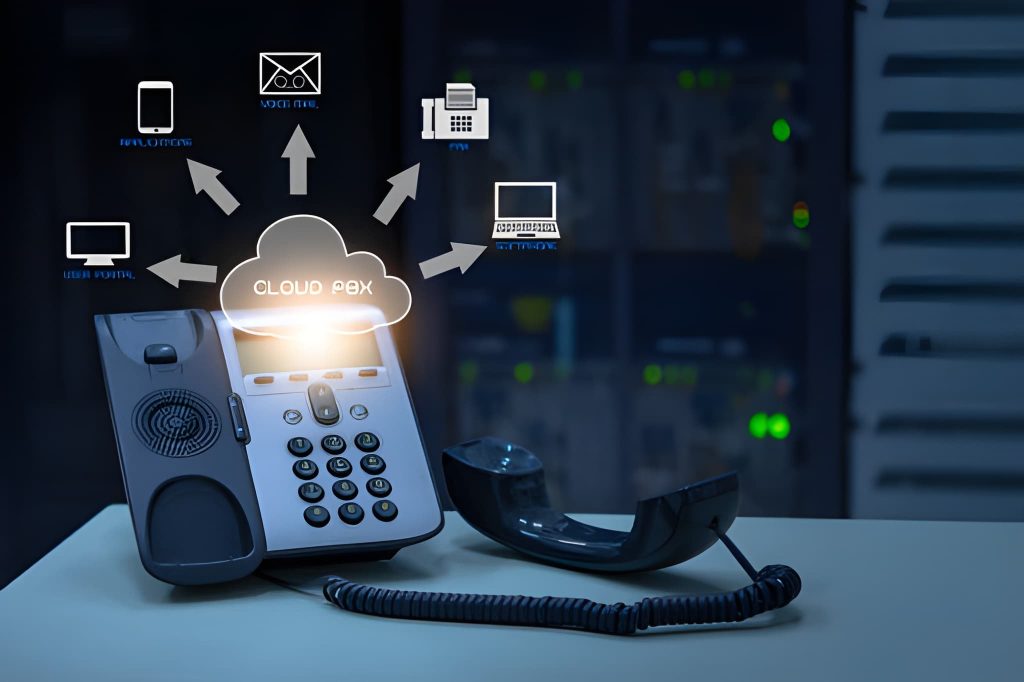
In order to understand properly how do cloud based phone systems work, we should be aware of that these systems generally combine cloud software, internet technology and VoIP infrastructure to replace old copper phone lines. The process is quite simple for the end user but behind the scenes it uses smart call routes, digital voice, cloud hosting to deliver fast, reliable and clear communication.
Here is a clearer look at how everything works step-by-step:
1. Calls Are Transmitted Over the Internet
A cloud phone system does not rely on traditional landline wiring. Instead, when someone makes a call:
- Your voice is converted into small digital data packets
- These packets travel across your internet connection
- VoIP technology reassembles them into clear audio
Because it uses the internet instead of physical lines, cloud calling usually offers:
- Better voice clarity
- Faster connection
- More stable performance
- Lower cost
This conversion process happens instantly, which is why cloud calling feels no different from a traditional phone call except clearer.
2. The Cloud Handles All Call Routing and Management
After the call reaches the cloud, the system acts like a virtual phone server. It automatically determines where the call should go based on the rules your business has set.
This includes:
- Routing calls to the correct team member or department
- Redirecting calls to mobile devices when staff are off-site
- Applying business hours and after-hours rules
- Placing callers into organized call queues during busy times
- Sending unanswered calls to voicemail
- Enabling call transfers between staff, even if they are not in the same location
- Triggering menu options through auto attendant like Press 1 for Sales, etc.
The cloud processes and routes call in milliseconds which makes communication smooth and efficient for both customers and your team.
3. Your Devices Receive the Call Instantly
Once the cloud completes routing, the call is delivered to whatever device you have chosen. A cloud phone system allows your business number to ring on:
- Desk phones
- Mobile apps
- Softphones on laptops or desktops
- Tablets
- Any VoIP-compatible device
This is one of the biggest advantages of cloud based phone systems work, your business phone number becomes completely portable. You can work from home, from the office or on the road and still appear as if you are calling from your main business line.
4. All Features Are Managed Digitally Through the Cloud
In a cloud phone system, every feature that used to require complex hardware is now handled through software. This makes your system easier to manage, more powerful and more affordable.
These features include:
- Voicemail storage and transcription
- Call recording for training or compliance
- Auto-attendant menu setup
- Real-time call analytics
- Multi device syncing
- Integrations with CRM and business tools
- User management like add or remove staff instantly
Because everything runs through the cloud, you do not need:
- On-site servers
- PBX boxes
- Manual maintenance
- Expensive upgrades
The system updates automatically in the background, ensuring your business always has the latest communication features without downtime.
This expanded explanation shows how do cloud based phone systems work using a simple, powerful flow of VoIP technology, digital call routing, cloud hosting and multi device access. This is what makes cloud phone systems ideal for modern Australian businesses that want mobility, reliability and professional communication without costly infrastructure. If you want to know more about how do it works, you can connect with TECHOM Systems, a trusted platform for cloud phone services. You can simply click on the below image to connect with us, or you can send your query at hello@techomsystems.com.au.

Why Businesses Are Switching To Cloud Phone Systems?

Now that you understand how do cloud based phone systems work, here is why more organisations are adopting them:
- Cost Savings: No expensive hardware installations maintenance or phone line rental.
- Better Call Quality: Cloud systems often provide clearer audio than landlines.
- Mobility: Your team can take calls from anywhere using the cloud phone system.
- Scalability: Add or remove users instantly without installation delays.
- Professional Features: Get some enterprise level features such as auto attendant, call recording, call queues, analytics and CRM integrations.
- Improved Customer Experience: Faster routing fewer missed calls and better response times.
If your business values flexibility professionalism and affordability cloud-based phone systems are the smartest option.
Key Components Inside a Cloud Phone System
The key components inside a cloud phone systems and due to which we can come to know how do cloud based phone systems work are the major system components:
- VoIP Technology: The foundation that converts your voice into digital data.
- Cloud PBX: A virtual phone server that manages call routing audio processing call forwarding and other features.
- End-User Devices: The devices your team uses such as mobiles, laptops or desk phones.
- Internet Connection: Your business internet handles call transmission.
- Software Dashboards: This is where you manage users view analytics update, call flow and control system settings.
These components work together to give you a complete business communication solution.
How Do Cloud Phone System Work For Small Businesses?
Cloud systems make running a business easier by simplifying communication. Here is what small businesses gain immediately:
- One Business Number Across All Devices: You can answer calls on mobile desktop or desk phone.
- Automatic Call Routing: Calls reach the right person even when you are not available.
- Voicemail to Email Delivery: Voicemails arrive in your inbox directly for fast follow-up.
- Auto Attendant for Professional Call Handling: Your business sounds polished with menu options such as:
- Press 1 for Sales
- Press 2 for Billing
- Press 3 for Support
- Work From Anywhere: Perfect for mobile teams hybrid teams remote teams and growing companies.
This is exactly how do cloud based phone systems work to support businesses that want reliability and flexibility without high costs.
Did You Know?
- Cloud phone systems let you take calls from mobiles, tablets, laptops or desk phones that gives your team full mobility.
- You can keep your existing business number when you switch to a cloud phone system via simple number porting.
- Cloud based business phone systems cut business communication costs by up to 40 percent when compared to traditional landlines.
- Features like call routing, auto attendant, voicemail to email and call recording come at no extra hardware cost.
- Cloud systems update automatically, so you always have the latest features and security that too without manual maintenance.
How Cloud Phone Systems Improve Customer Experience?
Customer experience has a direct impact on revenue. Cloud systems help you deliver smoother communication faster:
- Less Waiting: Call queues reduce hang-ups.
- Faster Routing: Customers reach the right person immediately.
- Better Call Handling: Auto-attendant and intelligent routing reduce manual work.
- More Reliable Communication: Cloud systems stay active even during outages.
- Clearer Voice Quality: Digital audio provides HD clarity.
These improvements help your business win more customers and keep existing ones happy.
How Do Cloud Based Phone Systems Work with Remote Teams?

Remote work requires communication tools that follow your team everywhere. Here’s how cloud phone systems support remote teams:
- Employees log in from any device
- All calls and messages sync in one account
- Mobile apps allow calls using your business number
- Remote staff can transfer calls as if they were in the office
- Supervisors can monitor analytics call volume and performance
This is one of the biggest advantages of how do cloud based phone systems work in modern workplaces.
Cloud Based Phone Systems vs Traditional Phone Lines
Here is the comparison between cloud phone system and traditional phones after knowing which you will be able to differentiate easily and know the benefits of choosing cloud phone system.
| Feature | Cloud Phone Systems | Traditional Phones |
| Setup | Fast, no hardware | Expensive, slow |
| Mobility | Work anywhere | Office-only |
| Cost | Low monthly fees | High installation |
| Features | Advanced | Basic |
| Scaling | Immediate | Complex |
| Reliability | High | Depends on lines |
The comparison makes it clear why cloud solutions outperform older systems.
What Should I Do Now?
- If your current phone system feels outdated, slow or too limited then it is the right time to modernise your communication.
- Consider whether your team works remotely or on the go. Cloud calling lets everyone use the same business number from any device.
- You also need to compare the cost of maintaining your landlines with the lower monthly cost of a cloud-based phone system.
- Think about the customer experience you want your business to deliver. Features like auto-attendant and call routing make a big impact.
- If you want a communication system that is flexible, reliable and scalable, contact TECHOM Systems for a tailored cloud phone solution built for Australian businesses.
TECHOM Systems — Your Partner in Modern Business Communication
If you are ready to modernise your communication, TECHOM Systems offers one of Australia’s best cloud phone systems for small and medium businesses. Now the question here arises is why choose TECHOM Systems for Cloud Phone System services. Well, based on the following reasons and specialties, we can say that it is the best choice for you to avail cloud phone service:
- Easy setup with local support
- Customised call flow design
- Mobile and desktop apps included
- Professional auto-attendant configuration
- Reliable uptime and secure cloud hosting
- Affordable monthly plans with no hardware needed
- Scalable options for growing teams
If your business wants smoother communication, faster call handling and more professionalism upgrading to a cloud-based phone system is the best next step.
Frequently Asked Questions
#1: Can I Use my Existing Number With a Cloud Phone?
Ans: Yes. Most providers including TECHOM Systems, allow to keep the existing number. This process is called number porting which allows your existing phone number to be transferred from your traditional phone provider to your new cloud phone system without any interruption to service. It is a simple, seamless transition that keeps your business identity consistent.
#2: How Do I Convert My Landline Phone To VoIP?
Ans: To convert your landline phone to VoIP, you simply move your phone service from a traditional copper line to an internet-based system. The process starts by choosing a business VoIP telephone system or cloud phone provider, who will then port your existing number and activate your new service. You can continue using your landline handset by connecting it to a VoIP adapter, or switch to VoIP desk phones or mobile apps. Once set up, all your calls run through the internet, giving you clearer audio, advanced features and lower monthly costs.
#3: Do Cloud Phone Systems Need Special Hardware?
Ans: No, cloud phone systems do not require any special hardware. Most of the businesses can start using a cloud phone system with devices they already have, such as laptops, mobile phones, or desktops. All the calls are managed through apps or softphones, so there is no need for on-site servers or traditional PBX equipment. If you prefer a desk phone experience, you can use VoIP-compatible handsets, but they are completely optional. This flexibility is one of the biggest advantages of cloud-based phone systems, making setup faster, cheaper and much easier for small businesses.
#4: Are Cloud Phone Systems Secure?
Ans: Yes, cloud phone systems are very secure when you use a trusted provider. They protect your calls and data through encryption, user authentication, secure data centres and advanced firewall protection. Unlike traditional landlines, which can be physically tapped or disrupted, cloud systems use modern security protocols like those used in online banking. Providers also monitor networks continuously to detect and block threats.
Final Thoughts
Understanding how do cloud based phone systems work makes it very clear why so many Australian businesses are adopting this technology. Cloud-based phone systems offer savings performance, flexibility and modern features that traditional landlines cannot match.
If you are looking to improve customer service, reduce missed calls, support remote work and modernise your communication then upgrading to a cloud phone system is one of the smartest decisions you can make. Also, if you have any query related to cloud phone system, you can directly contact TECHOM Systems by contacting at hello@techomshystems.com.au.

Joe thrives at the intersection of technology and team productivity. With 8+ years in IT operations, cloud infrastructure and modern-driven process improvement, she excels at transforming complex systems into organized, manageable workflows. Joe’s real strength lies in helping teams make sense of technical environments, clarifying cloud deployments, streamlining IT processes and ensuring AI tools are applied effectively. Her approachable guidance and structured communication reduce confusion, boost collaboration and make technical innovation feel achievable. Joe believes technology works best when it empowers people, not complicates their work.